If your Google My Business listing is not showing in the local 3-pack, something is holding it back.
Most of the time, it’s not competition — it’s small GMB mistakes that go unnoticed.
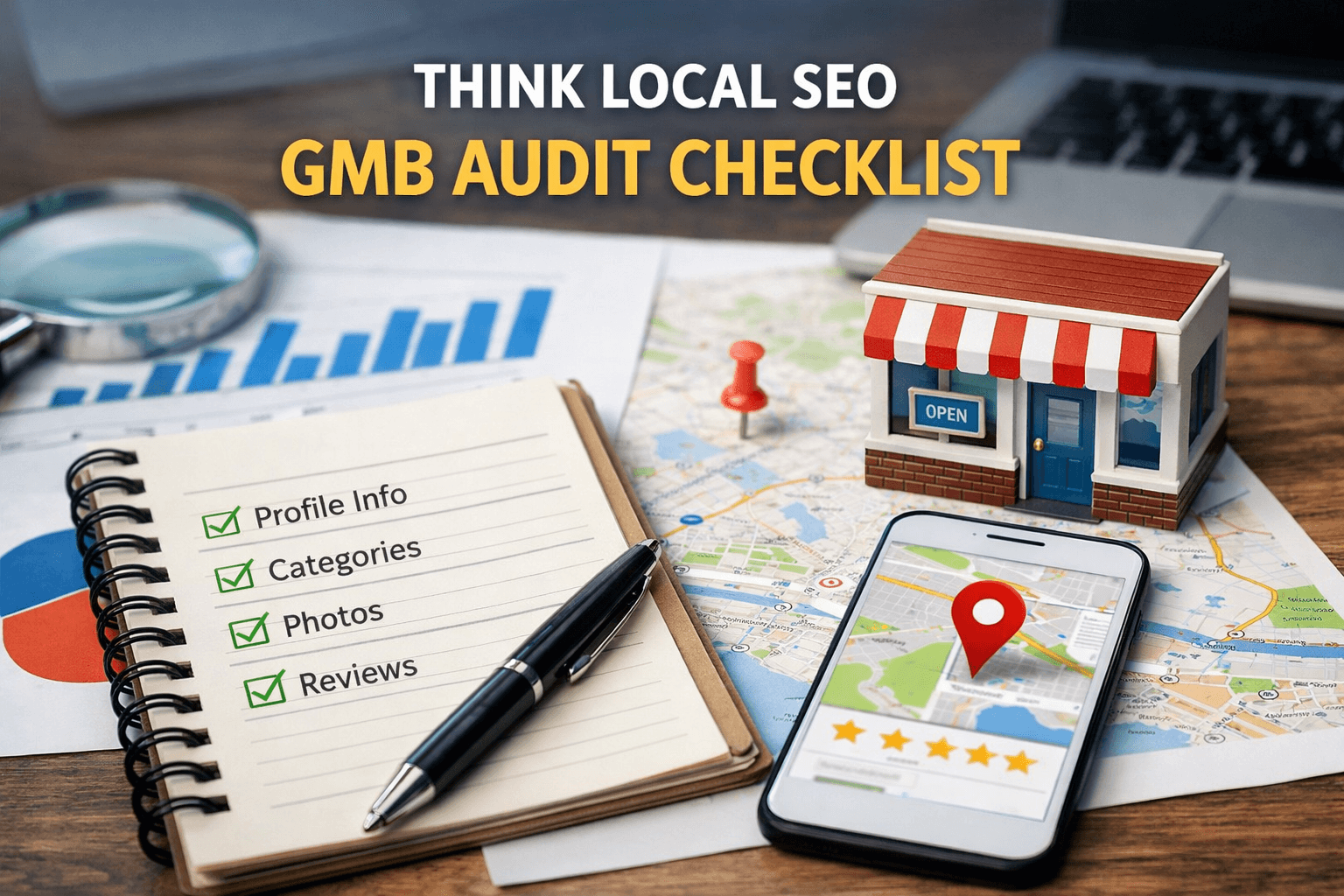
This Think Local SEO GMB audit checklist is designed to help you quickly identify what’s wrong with your Google Business Profile and fix it before it hurts your local rankings.
For a deeper explanation of local ranking factors, read my Think Local SEO Google My Business audit guide.
Whether you’re a small business owner, a local SEO beginner, or a marketer, this checklist will show you exactly what to check, what to fix, and what to optimize to improve visibility on Google Maps and local search.
Table of Contents
What Is a Think Local SEO GMB Audit?
A Think Local SEO GMB audit is the process of checking your Google Business Profile to make sure it follows Google’s local ranking factors.
The audit focuses on:
- Profile completeness
- Local relevance
- Trust signals
- User engagement
- Consistency across the web
Doing this audit regularly helps you:
- Fix ranking drops
- Beat local competitors
- Get more calls, visits, and leads
Think Local SEO GMB Audit Checklist
1. Google Business Profile Ownership & Access
✔ You are the primary owner
✔ No unknown users have access
✔ Email used is secure
Why it matters:
Wrong access settings can lead to profile suspension or unauthorized changes.
2. Business Name Accuracy
✔ Exact real-world business name
✔ No extra keywords added
❌ Avoid keyword stuffing
Bad example:
Best Dentist in Delhi | Cheap Dental Clinic
Good example:
Smile Care Dental Clinic
Keyword stuffing is one of the biggest GMB audit mistakes.
3. Primary & Secondary Categories
✔ Primary category is 100% relevant
✔ 3–5 supporting secondary categories
✔ No unrelated categories
Tip:
Your primary category impacts rankings more than keywords in description.
4. Business Description Optimization
✔ 750 characters used wisely
✔ Local keywords added naturally
✔ Services + location mentioned
❌ No promotional links or emojis
Focus on what you do + where you serve.
5. Address & Service Area Check
✔ Address matches website & citations
✔ Service areas added correctly
✔ No fake or virtual addresses
If you’re a service-area business, hide the address and add service locations instead.
6. Phone Number & Website URL
✔ Local phone number (not call center)
✔ Clickable website URL
✔ URL opens the correct landing page
Mismatch in phone numbers hurts local trust signals.
7. Business Hours & Special Hours
✔ Regular hours updated
✔ Holiday hours added
✔ No outdated timings
Incorrect hours lead to:
- Poor user experience
- Negative reviews
- Ranking loss
8. Photos & Logo Audit
✔ Business logo uploaded
✔ Cover photo optimized
✔ Real location photos added
✔ New photos added monthly
Profiles with fresh photos get higher engagement.
9. Reviews & Ratings Check
✔ Reviews replied to (positive & negative)
✔ Keywords appear naturally in reviews
✔ No fake or spam reviews
Replying to reviews is a local ranking signal many businesses ignore.
10. Google Posts Activity
✔ Posts added weekly or bi-weekly
✔ Service updates or offers shared
✔ Call-to-action buttons used
Inactive profiles often lose visibility over time.
11. Q&A Section Audit
✔ Common questions answered
✔ Your own questions added
✔ Spam questions reported
Most businesses forget this section — easy win.
12. Products & Services Section
✔ Services listed clearly
✔ Descriptions added
✔ Prices (optional but helpful)
This improves relevance for long-tail searches.
13. NAP Consistency (Outside GMB)
✔ Name, Address, Phone same everywhere
✔ Website footer matches GMB
✔ No old listings with wrong info
NAP inconsistency is a silent ranking killer.
14. Insights & Performance Review
✔ Check calls, clicks, direction requests
✔ Compare last 30 days
✔ Identify sudden drops
If performance drops suddenly, it’s time for a full GMB audit.
How Often Should You Do a GMB Audit?
- Small businesses: Every 3 months
- Competitive niches: Monthly
- After ranking drops: Immediately
Regular audits prevent sudden visibility loss. For a complete explanation, read this step-by-step Google Business Profile audit guide
According to Google’s official local ranking factors, relevance, distance, and prominence play a key role in how businesses appear in local search results.
Final Thoughts
This Think Local SEO GMB audit strategy helps you find gaps, fix mistakes, and improve local rankings without using paid tools.
Once this checklist is done, your next step is to:
- Audit manually in detail
- Fix common GMB mistakes
- Monitor ranking changes
👉 In the next guide, I’ll explain Google My Business audit step by step for beginners and show exactly how to do each check manually.