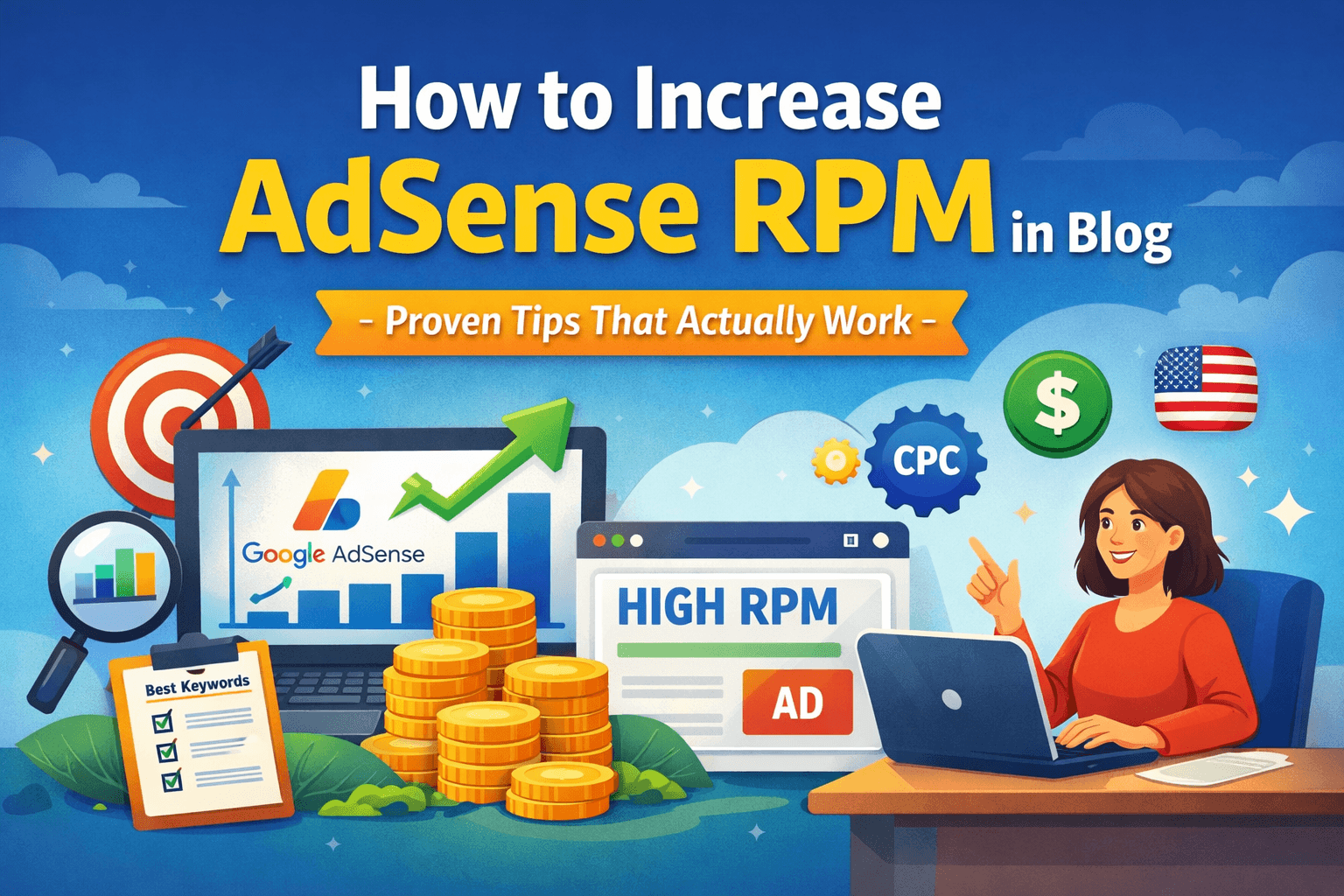
If your blog is getting traffic but earnings from Google AdSense are still low, the problem is usually low RPM. RPM (Revenue per 1000 impressions) determines how much you earn even if traffic stays the same.
The good news: you can increase RPM without increasing traffic — just by optimizing content, layout, and audience quality.
Table of Contents
1. Target High CPC Keywords
High CPC keywords attract advertisers willing to pay more for clicks, which directly increases your RPM. These keywords usually show buyer intent, meaning visitors are more likely to click ads related to tools, services, or software.
Examples:
- Best SEO tools
- SERP tracker tools
- Keyword research tools
- SEO audit tools
2. Get Traffic From High-Paying Countries
Traffic from countries like the US, UK, and Canada generates higher ad bids because advertisers compete more in these markets. Even with lower traffic volume, Tier-1 countries can produce significantly higher RPM.
To get this traffic:
- Write global topics
- Use simple English
- Avoid country-specific titles
- Target software/tools keywords
3. Improve Ad Placement
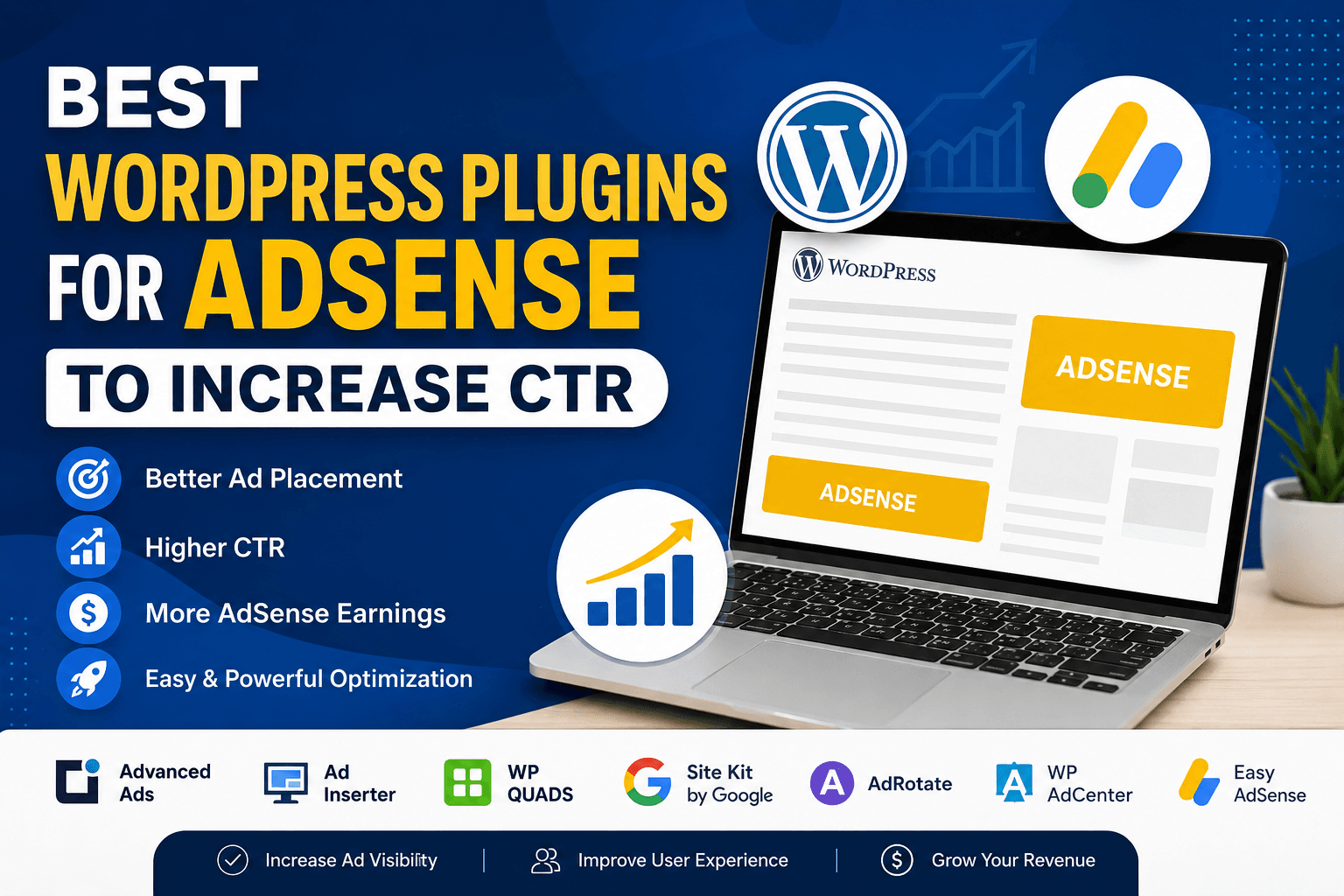
Ad placement affects visibility, which impacts clicks and RPM. Ads placed inside content perform better because users are already engaged and more likely to interact.
Best placements:
- After intro
- Middle of content
- Before conclusion
- Sticky sidebar
4. Write Longer Articles
Longer articles allow more ad placements without hurting user experience. They also increase session duration, which improves ad impressions and RPM.
Ideal article length:
- Minimum 1500 words
- Best range 1800–2500 words
5. Increase Time on Page
When users stay longer, more ads load and impressions increase. Higher engagement also signals quality traffic, which improves ad relevance and RPM.
Improve by:
- Add images
- Use short paragraphs
- Add FAQs
- Add tables
6. Enable Auto Ads
Auto ads automatically place ads in high-performing positions using machine learning. This removes guesswork and helps maximize ad visibility and earnings.
Best auto ad settings:
- Anchor ads ON
- Vignette ads ON
- Multiplex ads ON
- In-page ads ON
7. Use High RPM Content Types
Some content types naturally attract commercial ads with higher CPC. These usually target users who are comparing tools or planning to purchase.
High RPM content:
- Best tools
- Comparisons
- Reviews
- Alternatives
- Tutorials
8. Improve CTR (Click Through Rate)
Higher CTR means more ad clicks, which increases earnings without increasing traffic. Clean design and proper spacing help ads look natural and not intrusive.
Improve CTR:
- Place ads near headings
- Avoid clutter
- Use white background
- Don’t overload ads
9. Use Internal Linking
Internal linking increases pageviews per visitor, which increases total ad impressions. It also helps users stay longer and explore related content.
Best methods:
- Related posts section
- Contextual links
- Topic clusters
- Read more blocks
10. Check Performance in Analytics
Tracking performance helps identify which pages generate higher RPM. You can then optimize low-performing pages by improving content and ad placement.
Check:
- High RPM pages
- Low RPM pages
- Time on page
- Traffic country
Quick RPM Boost Checklist
✔ Use high CPC keywords
✔ Get US traffic
✔ Improve ad placement
✔ Write longer content
✔ Increase time on page
✔ Enable auto ads
✔ Write comparison content
✔ Improve CTR
✔ Add internal links
✔ Monitor performance
Final Thoughts
Increasing your AdSense RPM is not about luck — it’s about strategy and optimization. Even with the same traffic, a well-optimized blog can earn 3x–10x more just by focusing on high CPC keywords, better ad placement, and user engagement.
If you’re in the SEO niche (like you), the biggest opportunity lies in tool-based and comparison content. Stop focusing only on informational guides and start targeting commercial intent topics — this is where real money comes in.
Remember:
👉 Traffic + Intent + Optimization = High RPM
Stay consistent, update your old articles, and focus on quality over quantity. Your RPM will improve over time.
FAQ’s
1. What is a good AdSense RPM for blogs?
A good RPM depends on your traffic source and niche. For US traffic in the SEO niche, a healthy RPM is between $8 to $15, while beginners often start with $1–$3.
2. Why is my AdSense RPM very low?
Low RPM usually happens due to low CPC keywords, poor ad placement, or traffic from low-paying countries. Informational content also tends to earn less compared to buyer-intent content.
3. Can I increase RPM without increasing traffic?
Yes, absolutely. You can improve RPM by optimizing ad placement, targeting high CPC keywords, and increasing user engagement, even if your traffic stays the same.
4. Do longer articles increase AdSense earnings?
Yes, lengthier content extends the time on page and allows for more ad placements. This results in higher ad impressions and better RPM.
5. Which type of content gives the highest RPM?
Content like tool lists, comparisons, reviews, and alternatives usually generates higher RPM because they attract advertisers targeting buyers.
6. How many ads should I place in one article?
Ideally, use 3–5 ads per article, depending on length. Avoid overloading your page, as it can reduce user experience and CTR.
7. Does traffic country affect AdSense RPM?
Yes, traffic from countries like the US, UK, and Canada generates higher RPM due to higher advertiser competition compared to countries like India or Pakistan.
8. Should I use Auto Ads or manual ads?
You should use both. Auto ads help optimize placements automatically, while manual ads allow you to control high-performing positions within your content.
9. How long does it take to improve RPM?
You can start seeing improvements within 1–2 weeks after optimizing ad placement and content. However, significant growth usually takes 1–3 months.
10. Is AdSense enough to earn from a blog?
AdSense is a good starting point, but combining it with affiliate marketing and digital products can significantly increase your total earnings.